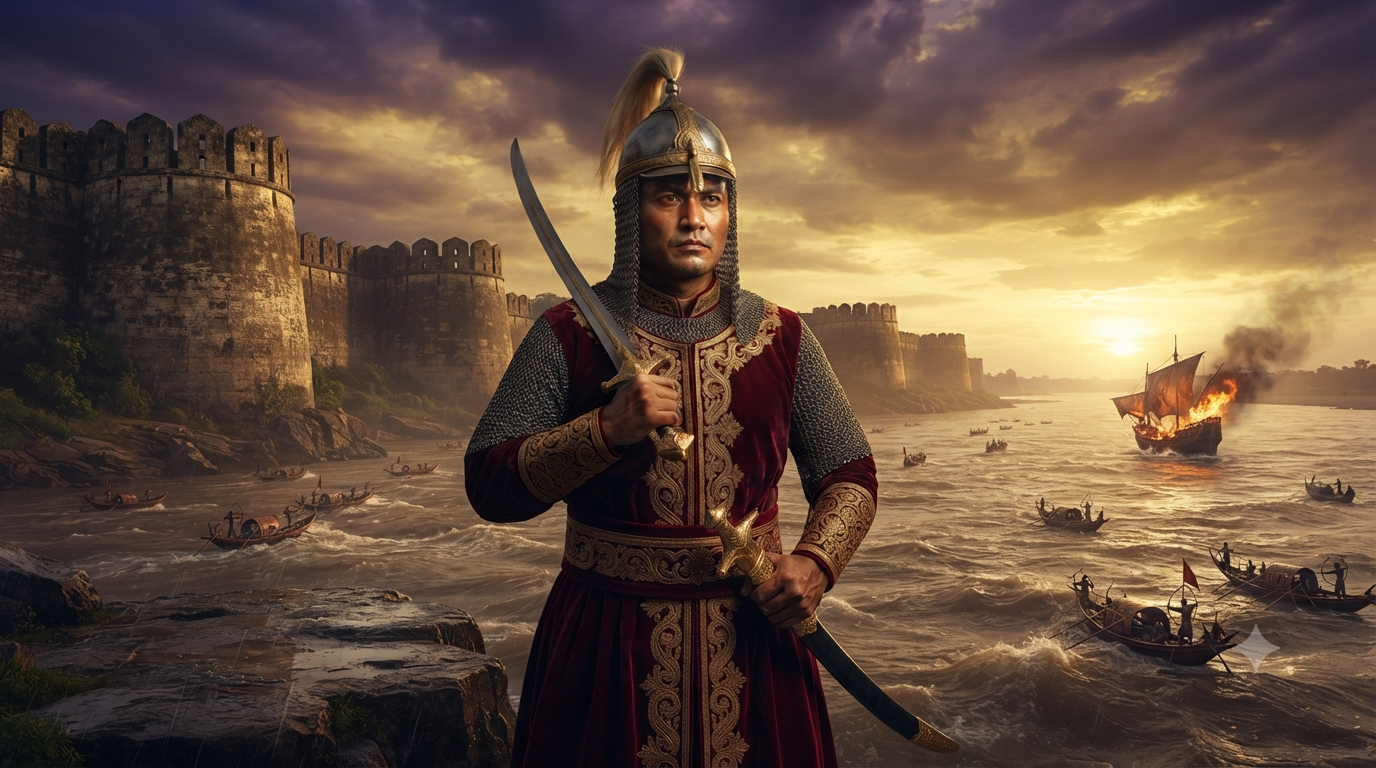

Imagine a battlefield in the dust-choked plains of modern-day Gujarat; the year is 1178 CE.
The ground is trembling. Thousands of heavily armoured cavalrymen, led by a ruthless conqueror who fancies himself invincible, are charging forward. Their swords glint menacingly in the harsh sun. They have swept through kingdoms like a wildfire, leaving destruction in their wake. Their commander is none other than Muhammad Ghori—the man history books often credit as the ultimate invader of India.
Now, look at who is waiting to meet them.
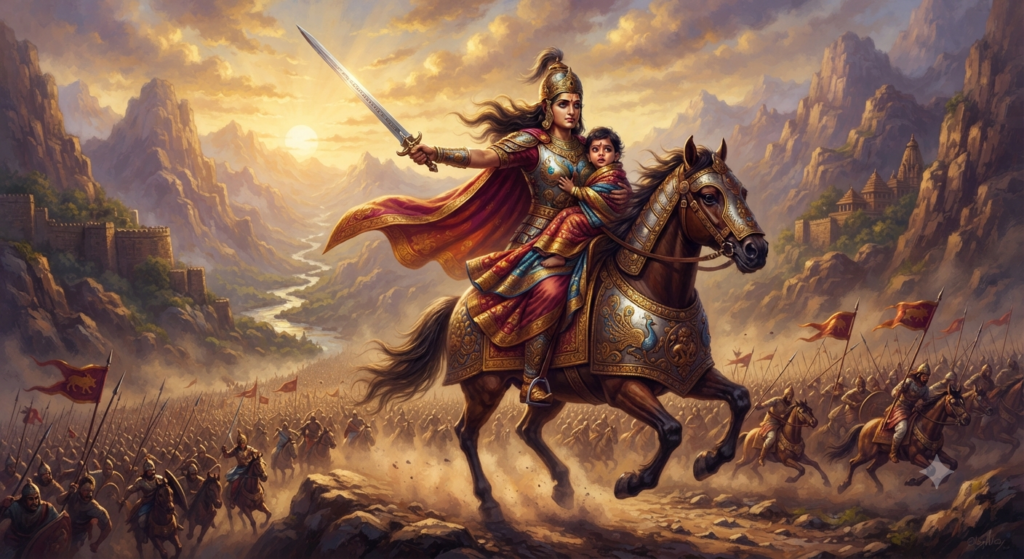
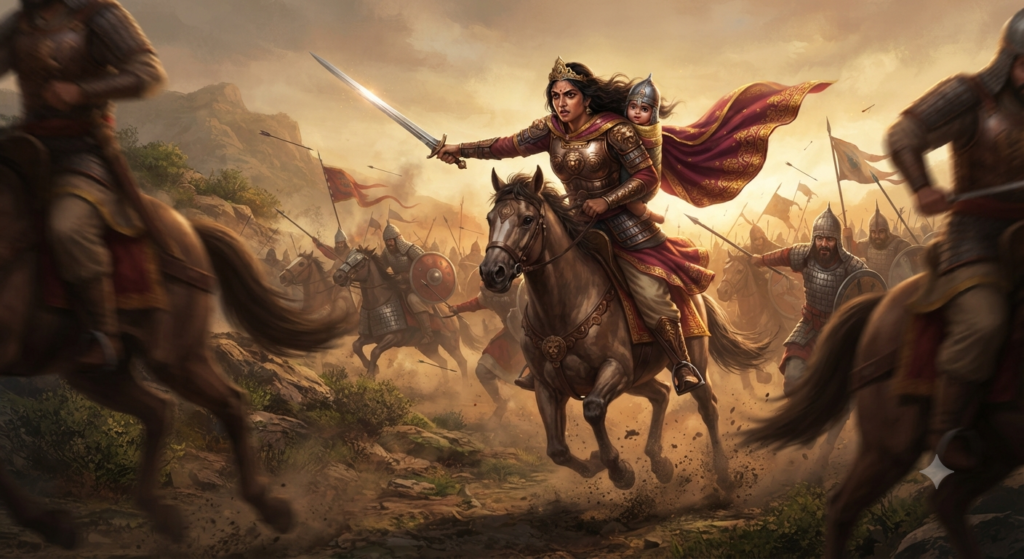
At the front of the defending army sits a woman. Tied securely to her back with a sturdy silk cloth is a little toddler—her young son and future king, fast asleep or wide-eyed against her shoulders. In her right hand, she holds a razor-sharp, steel-forged sword, raised high toward the sky. Her eyes are filled with fierce, unyielding fire.
This is Queen Naikidevi of the Chalukya dynasty. And long before Prithviraj Chauhan ever faced Muhammad Ghori on a battlefield, this incredible warrior queen met Ghori in combat—and handed him a humiliating, crushing defeat that sent him running back to the mountains with his tail between his legs.
A Kingdom in Peril: The Shadow of the Invader
Every great legend starts with a storm, and for the Chalukyas of Anhilwara (also known as the Solankis). Their core region was Gurjaratra (modern-day Gujarat and parts of southern Rajasthan), centered around their grand capital of Anhilwara (Patan), that storm wore the banner of the Ghurids.
Muhammad Ghori was young, ambitious, and hungry for glory. Fresh from his conquests in the northwest, he turned his hawk-like gaze toward the rich, prosperous coast of western India. Gujarat was a glittering jewel of wealth, trade ports, and magnificent temples. Ghori assumed that attacking Gujarat would be an easy stroll—after all, the throne was currently held by a woman.
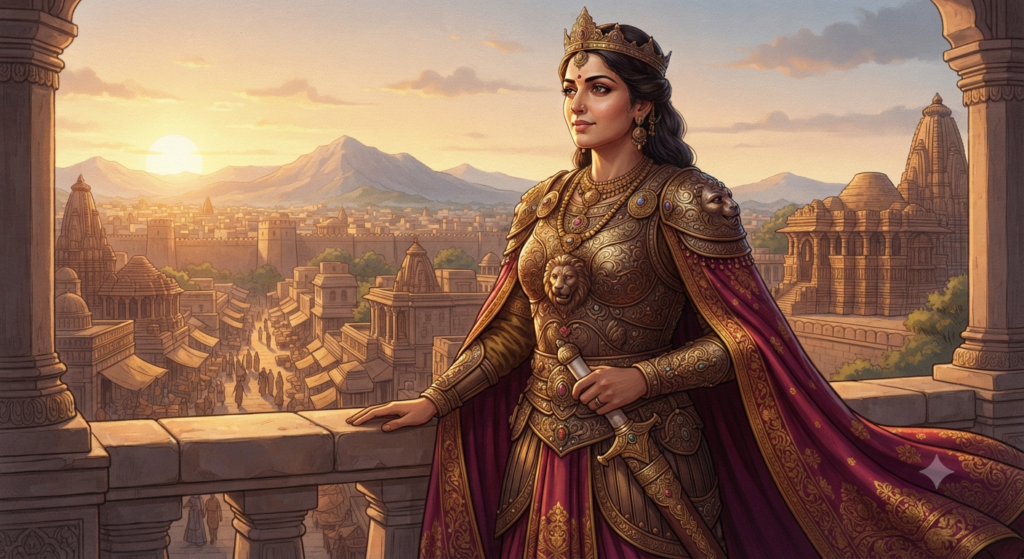
Naikidevi was the queen mother, acting as regent for her young son, Mularaja II, who was just a child. In the patriarchal, cutthroat politics of the 12th century, foreign invaders and rival kings whispered that a woman on the throne meant a weak defence. They thought the kingdom was ripe for the plucking.
Oh, how terribly wrong they were.
Naikidevi wasn’t just any royal; she was a princess of the Kadamba dynasty of Gopakapura (modern-day Goa), trained from childhood in horse-riding, statecraft, archery, and the brutal arts of warfare. When she heard that Ghori’s army had crossed the Thar Desert and was marching toward Gujarat, she didn’t panic. She didn’t sue for peace. Instead, she issued a challenge that echoed through the royal courts:
“If the invader wants our land, he will have to take it over our dead bodies.”
The Masterstroke: Choosing the Battlefield
A wise general never fights on the enemy’s terms. Ghori’s greatest strength was his massive, lightning-fast cavalry—heavy horsemen who could crush infantry in open, flat terrain.
Naikidevi knew she couldn’t match the sheer numbers of Ghori’s veteran army head-on in an open plain. So, she did something brilliant. She used the landscape as her ultimate weapon.
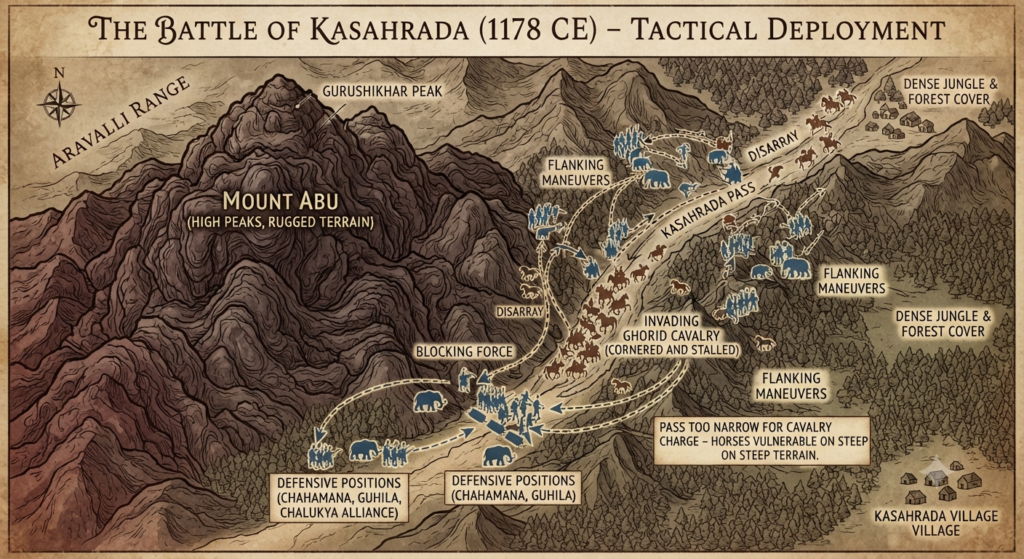
She chose the rugged, uneven terrain near the foot of Mount Abu, close to a little-known village called Kasahrada (near modern-day Sirohi in Rajasthan). The geography here was a nightmare for foreign cavalry. It was a maze of narrow mountain passes, dense thorny scrublands, and tricky marshy ground.
As Ghori’s grand army marched into the valley, confident of an easy victory, they suddenly realized they had walked straight into a trap.
The Battle of Kasahrada (1178 CE): When Mothers Become Storms
As the horns blew to signal the attack, Queen Naikidevi rode out at the very front of her troops.
Picture the scene through the eyes of a young soldier in her army: There is your queen, galloping fiercely on a warhorse, her hair flying in the wind, a royal infant strapped safely to her back, leading the charge into the roar of battle. How could any soldier feel fear when he saw his queen risking her life and her child for the motherland? It ignited a divine fury in the hearts of the Chalukya army.
As Ghori’s cavalry tried to charge, the uneven terrain broke their formation. Horses stumbled in the marshy ground. The heavy armour that made them invincible in the plains suddenly became a suffocating trap in the rocky hills.
And then, the Chalukya forces struck from all sides.
Local tribal archers, regional chieftains, and fierce loyalist warriors emerged from the hills like a tidal wave. They rained arrows down on the trapped invaders. Naikidevi herself fought with terrifying grace, her sword flashing as she cut through enemy ranks, protecting her son and her kingdom with every single strike.
As the ancient Prabandha Chintamani and other historical chronicles record, the battle was absolute carnage for the invaders. Ghori’s grand army was completely shattered, surrounded, and driven into chaos.
Muhammad Ghori, who had dreamed of an easy conquest, barely escaped with his life. With a handful of surviving bodyguards, he fled the battlefield in absolute disgrace, riding desperately across the desert back to Ghazni, vowing never to attack Gujarat again from that route.
Why History Forgot (And Why We Must Remember)
For decades, popular Indian history focused almost entirely on the battles of the late 12th and early 13th centuries in the northern plains, often painting a picture of continuous defeat for Indian rulers against foreign invaders.
Mainstream history books rushed past the 1178 Battle of Kasahrada because it didn’t fit the lazy narrative that India was an easy walkover. But local stone inscriptions, royal copper-plate grants, and contemporary Jain chronicles like the Dvyashraya Kavya and Prabandha Chintamani proudly preserve the truth.
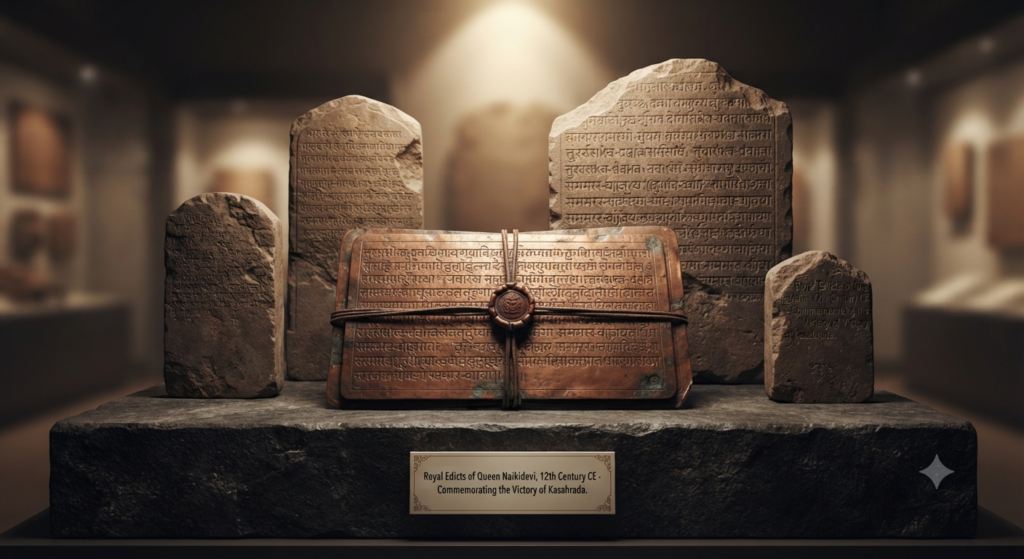
Naikidevi proved a monumental point that every child and student in India should know by heart: Long before Prithviraj Chauhan met Ghori at Tarain, a brave woman from Goa, ruling Gujarat, had already broken Ghori’s pride and driven him out of the country.
She wasn’t just a queen; she was a shield of civilization. She taught her people that courage has no gender, and that true leadership means standing at the very front lines when the storm hits.
Why Naikidevi Matters Today: The Modern Relevance for India’s Youth
Knowing Queen Naikidevi is not merely an exercise in dusting off old schoolbooks or basking in ancient glory. In modern India, her legacy carries profound, urgent lessons for the youth, for aspiring entrepreneurs, for leaders, and for society at large.
- Redefining Leadership in Crisis: In an era where modern leadership is often critiqued for staying safely behind closed doors, Naikidevi demonstrates the ultimate definition of accountability. She stood at the literal vanguard of the battle, proving that true leaders do not delegate danger; they share it. For young Indians stepping into corporate boardrooms, startups, public service, or social leadership, her example teaches that authority must be backed by absolute courage and skin in the game.
- The Power of Tactical Innovation Over Raw Odds: Ghori had the numbers; Naikidevi had the strategy. She didn’t let despair paralyze her when faced with a superior, heavily funded adversary. Instead, she analyzed her environment, leveraged local geography, and outsmarted her opponent. For today’s innovators, tech builders, and problem-solvers, her story is a masterclass in lateral thinking—proving that resourcefulness and clever execution always triumph over brute size.
- Shattering Preconceptions and Stereotypes: Foreign invaders underestimated her simply because she was a woman and a regent mother. She answered them with a decisive military defeat. Her life shatters every archaic notion of vulnerability, reminding young girls and women today that strength, strategic brilliance, and grit are universal traits, and that historical agency belongs to those who seize it.
- Reclaiming Authentic Roots: Modern India is striving to decolonize its mindset and uncover the suppressed truths of its civilizational past. Knowing unsung heroes like Naikidevi bridges the gap between historical amnesia and national self-respect. When our youth learn that our ancestors successfully resisted imperial expansion through brilliant indigenous defence, it builds an unshakeable foundation of cultural confidence.
Conclusion: A Legacy Carved in Steel
Today, as we look back across the centuries, the story of Queen Naikidevi shines like a beacon of hope and fierce pride. She reminds us that our history is filled with unsung titans who protected our culture, our temples, and our freedom against impossible odds.
When you read about the great defenders of Bharat, put Naikidevi at the top of your list. Share her story with your friends. Let them know about the mother who rode into war with her baby on her back and sent one of history’s most feared conquerors running for his life.
Because heroes don’t just wear capes—sometimes, they wear royal armour, hold a shining sword, and carry the future of the nation right on their backs.
यद् यदाचरति श्रेष्ठस्तत्तदेवेतरो जनः ।
स यत् प्रमाणं कुरुते लोकस्तद् अनुवर्तते ॥ – Bhagavad Gita 3.21
“Whatever a great person does, common people follow. Whatever standards they set, the world pursues.”
Historical References & Sources
- Prabandha Chintamani (by Merutunga): A seminal 14th-century text that details the reign of the Chalukyas and explicitly records the decisive victory of Queen Naikidevi over the Turushka (Ghurid) forces at Kasahrada.
- Dvyashraya Kavya & Contemporary Epigraphs: Chalukya-era inscriptions and literary works that document the governance of Queen Naikidevi as regent for Mularaja II and her military acumen in mobilizing regional alliances against Muhammad Ghori in 1178 CE.
- Dr. Dasharatha Sharma’s Historical Analyses: Academic documentation on early medieval Rajput and Chalukya resistance that accurately places the 1178 Battle of Kasahrada as Muhammad Ghori’s first major military disaster on Indian soil.