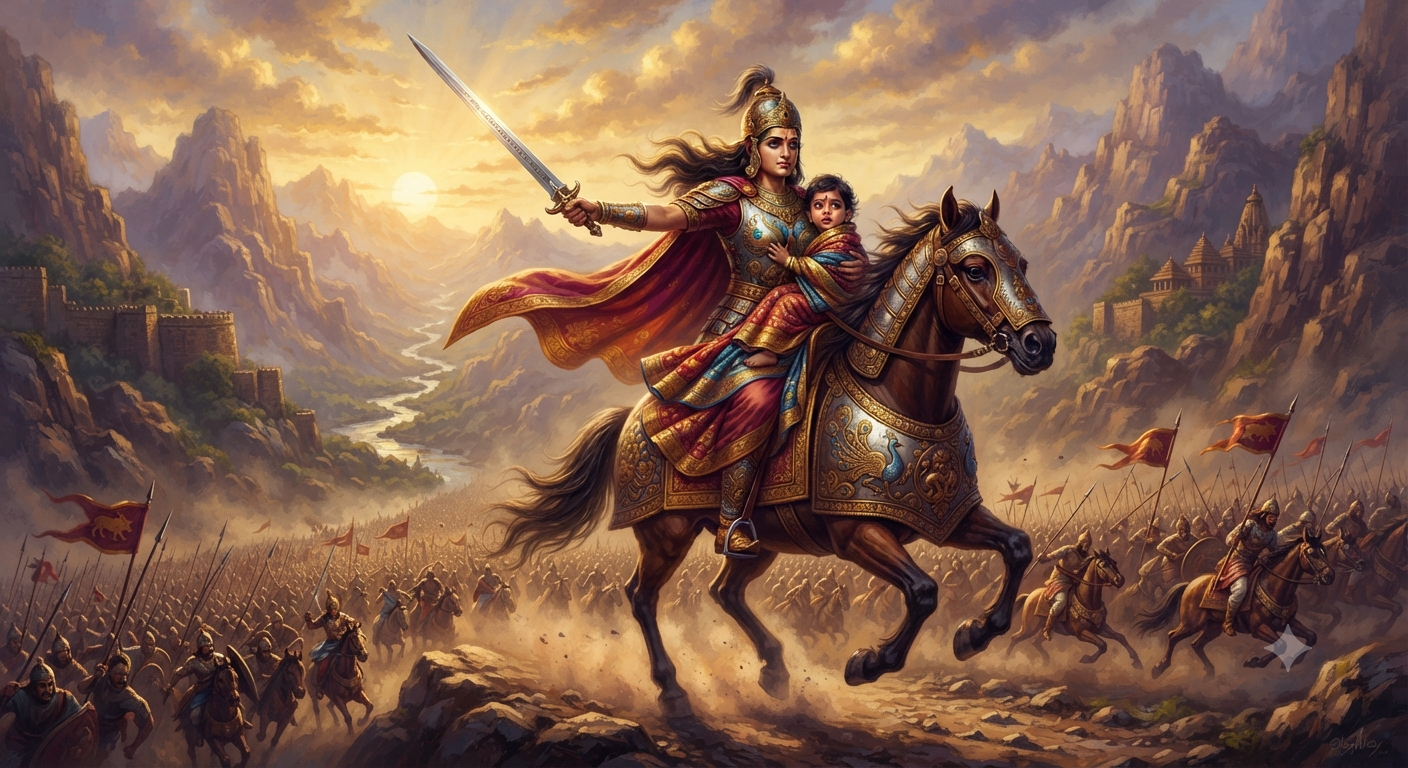

There are moments in history when the fate of a colonized nation hangs on a terrifying choice: remain silent and complicit, or make a sound so thunderous that an entire empire is forced to wake up.
In the early decades of the 20th century, the British Raj was an absolute monolith. From the high seats of the Viceroy’s House in New Delhi to the terrifying dungeons of the Cellular Jail in the Andamans, its machinery of oppression seemed indestructible. Through draconian laws, arbitrary detentions, and violent suppression, the empire sought to crush the soul of India’s freedom struggle into passive compliance. But as the colonial masters tightened their grip, they encountered a generation of revolutionaries who refused to bow.
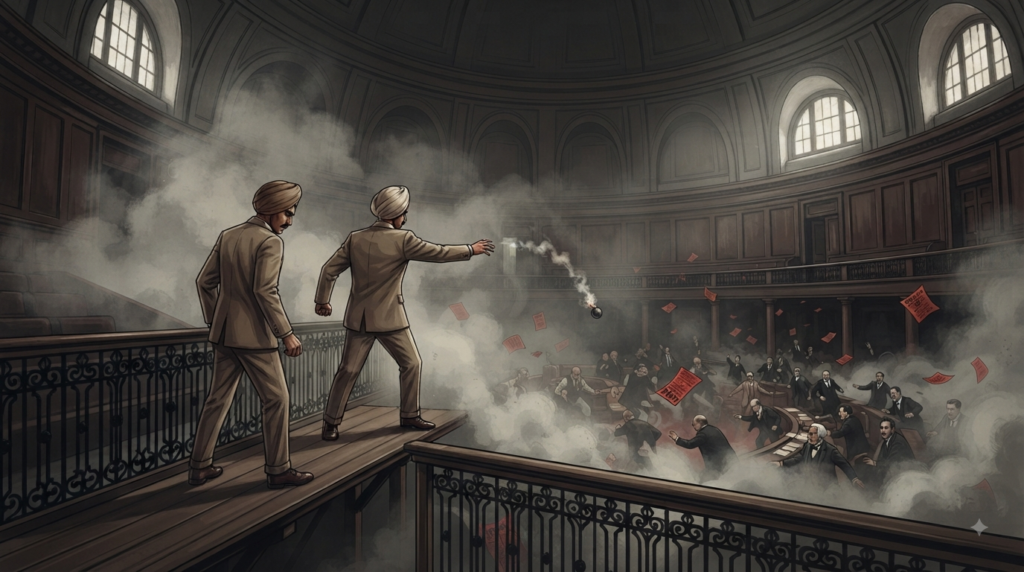
This is the story of Batukeshwar Dutt—the quiet, iron-willed co-architect of the Central Assembly bombing (1929), the man who stood shoulder-to-shoulder with Bhagat Singh, and the ultimate unsung hero who helped shake a sleeping continent, only to be forgotten by the very nation he helped set free.
The Rising Shadow: The Colonial Chokehold
By 1929, the British administration in India was growing increasingly desperate and brazen. Facing mounting waves of labour strikes, youth agitations, and a rising tide of socialist ideology, the imperial government decided to pass two ruthless pieces of legislation: the Public Safety Bill and the Trade Disputes Bill.
These laws were designed to silence political dissent completely. They gave the colonial state unbridled power to deport any suspected socialist, suppress trade unions, and throw dissenters behind bars without a fair trial. The legislative chambers in New Delhi were meant to rubber-stamp these oppressive measures under a veneer of democratic process.
The Hindustan Socialist Republican Association (HSRA), a collective of visionary revolutionaries committed to total independence and a socialist republic, realized that passive petitions and polite appeals had hit a dead end. The British administration was willfully deaf to the cries of millions of starving, exploited Indians.
A radical, symbolic act of defiance was required. The empire needed to be shaken out of its complacency, and the court of public opinion needed to be ignited. The task was entrusted to two of the HSRA’s most dedicated cadres: Bhagat Singh and Batukeshwar Dutt.
The Architecture of a Revolution: Batukeshwar Dutt’s Vital Role
While history frequently remembers Bhagat Singh as the charismatic ideologue and the face of the operation, Batukeshwar Dutt was the indispensable strategist and anchor who made it all happen.
Born on November 18, 1910, in Oari village of West Bengal’s Burdwan district, Dutt had encountered the fiery currents of the freedom movement early in life. While studying at PPN High School in Kanpur, he met revolutionary stalwarts like Chandrashekhar Azad and Bhagat Singh. His sharp intellect, unshakeable discretion, and absolute calmness under pressure quickly made him one of the most trusted operatives within the HSRA.
Dutt was a master of logistics. In the clandestine underground world of the revolutionaries, where a single slip meant the gallows, Dutt managed safe houses, transported secret communications, and worked alongside experts like Jatin Das to master the handling of explosives. He wasn’t chasing glory or personal fame; he was an ideological soldier who viewed his life as fuel for the fire of Indian liberation.
When the plan for the Assembly action was finalized, Dutt did not hesitate for a second. The mission was perilous, but its objective was precise: not to harm or assassinate a single human being, but to make a historic statement.
April 8, 1929: Making the Deaf Hear
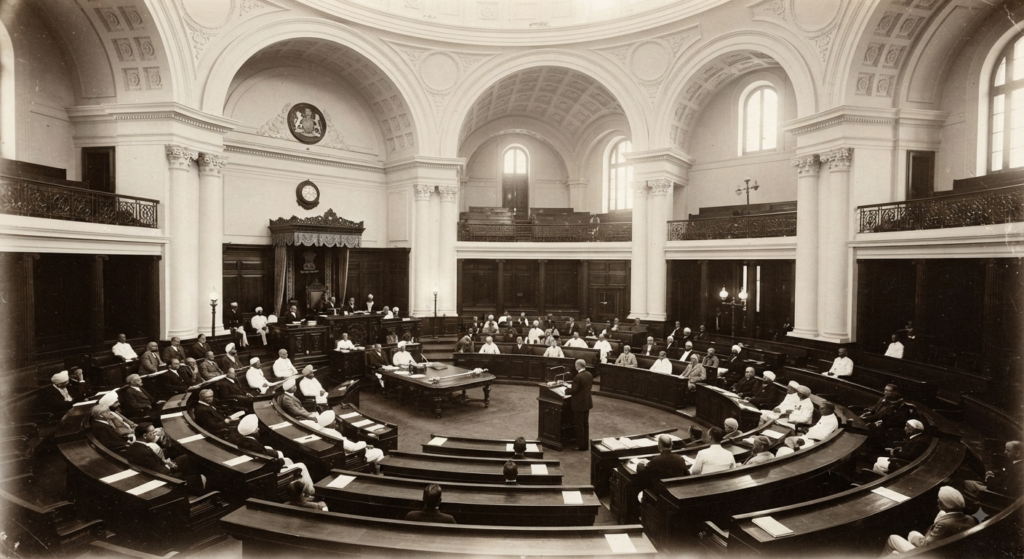
On the afternoon of April 8, 1929, the Central Legislative Assembly in New Delhi was in session. Sir George Schuster, the Finance Member, was busy introducing the repressive Public Safety Bill. The high-domed hall was filled with British officials and elite Indian collaborators, wrapped in an aura of supreme power and unchallengeable authority.
In the Visitors’ Gallery sat Bhagat Singh and Batukeshwar Dutt, dressed in Western suits.
As the vote was called, the tension in the room snapped. Suddenly, two low-intensity smoke bombs were hurled from the gallery into an empty space on the floor of the house. Smoke billowed through the grand chamber, causing panic among the lawmakers who scrambled for the exits.
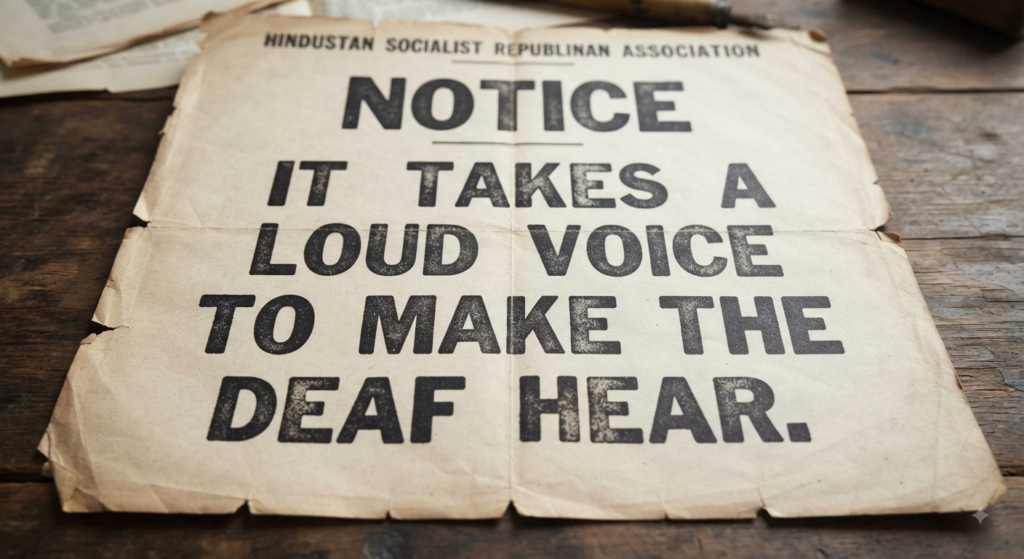
Instead of escaping in the ensuing chaos, as any normal criminal would, Singh and Dutt stood firm in the gallery. They showered the floor below with red leaflets bearing the iconic manifesto of the HSRA. The text concluded with a line that would immortalize the moment:
“It takes a loud voice to make the deaf hear. With these profound sentiments, we protest against the heinous measures unleashed upon our nation.”
Raising their fists toward the ceiling, they roared the slogan that would become the battle cry of millions: “Inquilab Zindabad!” (Long Live the Revolution!)
They threw red pamphlets into the air and allowed themselves to be arrested without a struggle, turning their imminent trial into a massive political megaphone to broadcast their revolutionary ideology to the entire country.
The Crucible of Suffering: Trials and the Cellular Jail
The subsequent trial of Bhagat Singh and Batukeshwar Dutt became a watershed moment in the Indian freedom struggle. Using the courtroom as a stage, they refused legal defence and instead delivered blistering speeches indicting British imperialism.
Convicted in the Assembly Bomb Case, Dutt was sentenced to transportation for life. He was subsequently shipped to the most feared penal colony in the British Empire: the Cellular Jail (Kala Pani) in the Andaman Islands.
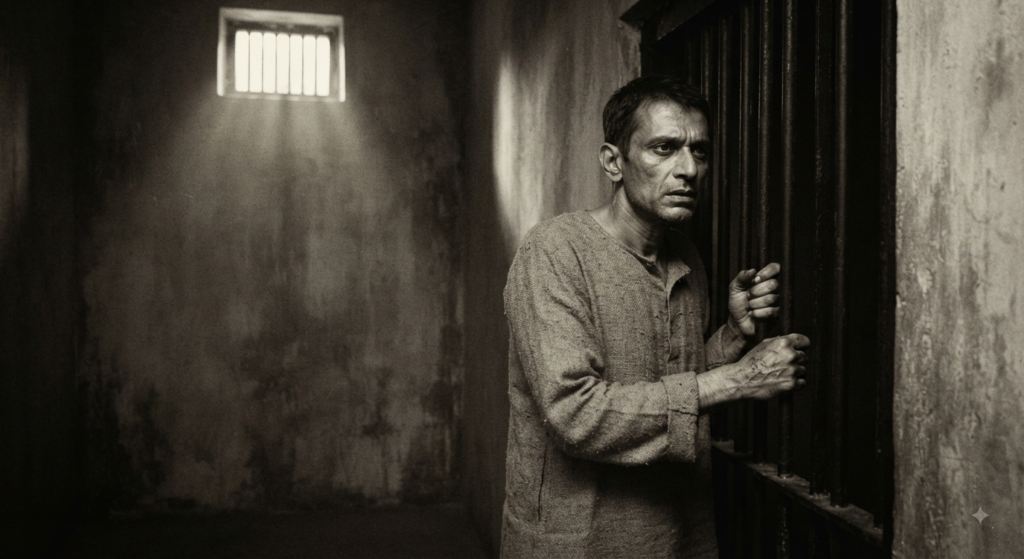
Life in the Andamans was engineered to break a man’s body and spirit. Solitary confinement, brutal labor, meager rations, and tropical diseases took a heavy toll. Yet, Dutt remained unbreakable. He joined historic hunger strikes alongside fellow political prisoners, fighting against the inhuman discrimination between Indian and British inmates. He became a founding pillar of the “Communist Consolidation” within the jail, turning the dark cells into classrooms of political education and resistance.
An Unsung Twilight: Forgotten by the Free India
Released in 1938 due to rapidly failing health—having contracted tuberculosis—Dutt did not rest. He plunged straight back into the national struggle, participating actively in the Quit India Movement of 1942, which earned him yet another four-year spell behind bars.
When India finally woke to freedom on August 15, 1947, Batukeshwar Dutt was a free man, but a profoundly displaced one.
Unlike many politicians who inherited power, Dutt found himself entirely unequipped for the compromises and luxuries of post-independence career politics. He lived a life of stark anonymity and financial hardship. He tried his hand at various odd jobs, working in a transport company and running a modest business, often struggling to make ends meet. The state he had sacrificed his youth for largely forgot him. He was a living ghost of an era of absolute idealism, wandering through a newly minted republic that had traded its revolutionary soul for bureaucratic comfort.
When he fell gravely ill with cancer in 1965, the government’s apathy was so profound that meager public appeals had to be made just to cover his medical expenses. Realizing his end was near, his final wish was simple: to be cremated alongside his brothers-in-arms.
On July 20, 1965, Batukeshwar Dutt passed away. His body was taken to Hussainiwala on the Indo-Pak border in Punjab, where he was cremated right beside Bhagat Singh, Sukhdev, and Rajguru—finally reuniting with the comrades he had marched with into history four decades prior.
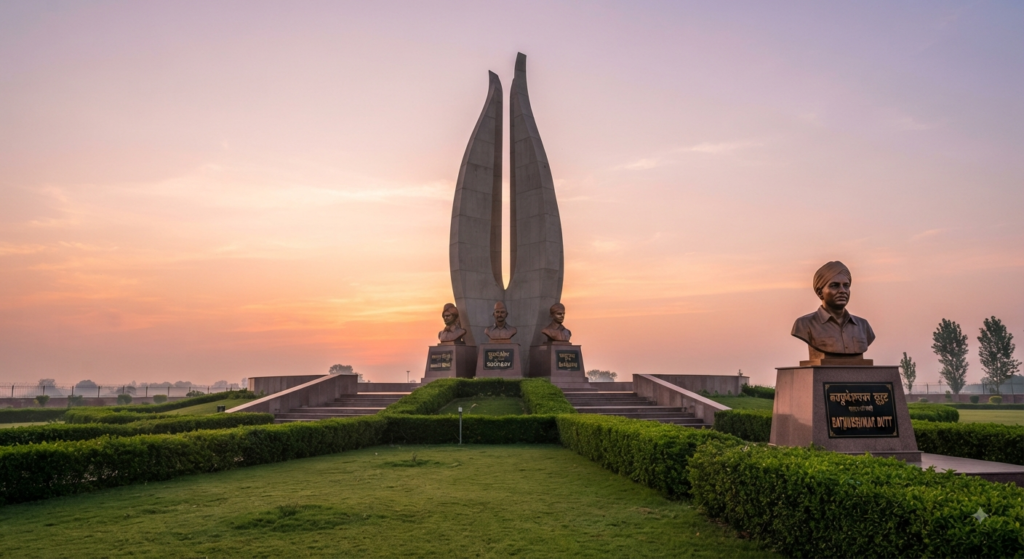
An Eternal Legacy
Batukeshwar Dutt’s life reminds us that true patriotism is often quiet, selfless, and devoid of a hunger for applause. He did not seek ministries, titles, or historical spotlight; he sought only the liberation of his motherland.
To remember Batukeshwar Dutt is to acknowledge that the freedom we enjoy today was paid for by the blood, broken bones, and silent sacrifices of thousands of unsung heroes who chose to make the deaf empire hear.
“क्लैब्यं मा स्म गमः पार्थ नैतत्त्वय्युपपद्यते।
क्षुद्रं हृदयदौर्बल्य त्यक्त्वोत्तिष्ठ परंतप॥” – Bhagavad Gita, Chapter 2, Verse 3
“Do not yield to impotence, O Partha! It does not befit you. Cast off this petty weakness of the heart and arise, O scorcher of foes!”
Historical References
1. Primary Court Records & Legislative Proceedings (1929): The official transcripts of the Central Assembly Bomb Case trial, detailing the statements, leaflets, and ideological positions put forward by Batukeshwar Dutt and Bhagat Singh.
2. The Hindustan Socialist Republican Association (HSRA) Archives: Contemporaneous documents and manifestos detailing the planning, logistics, and execution of the 1929 Assembly action.
3. Cellular Jail Archives & Historical Logs (Andaman & Nicobar Administration): Documentation of political prisoners, hunger strike logs, and penal records from the Andaman Islands verifying Dutt’s imprisonment and resilience.