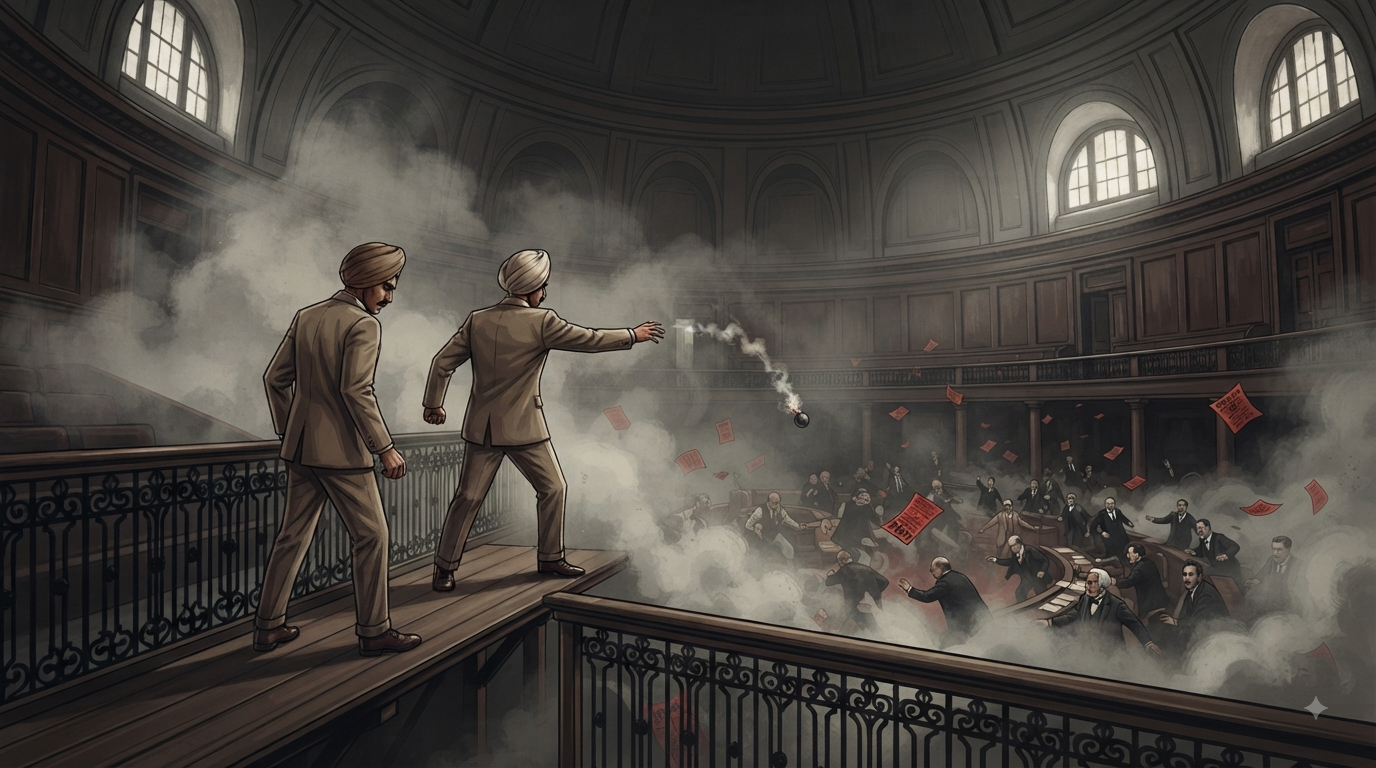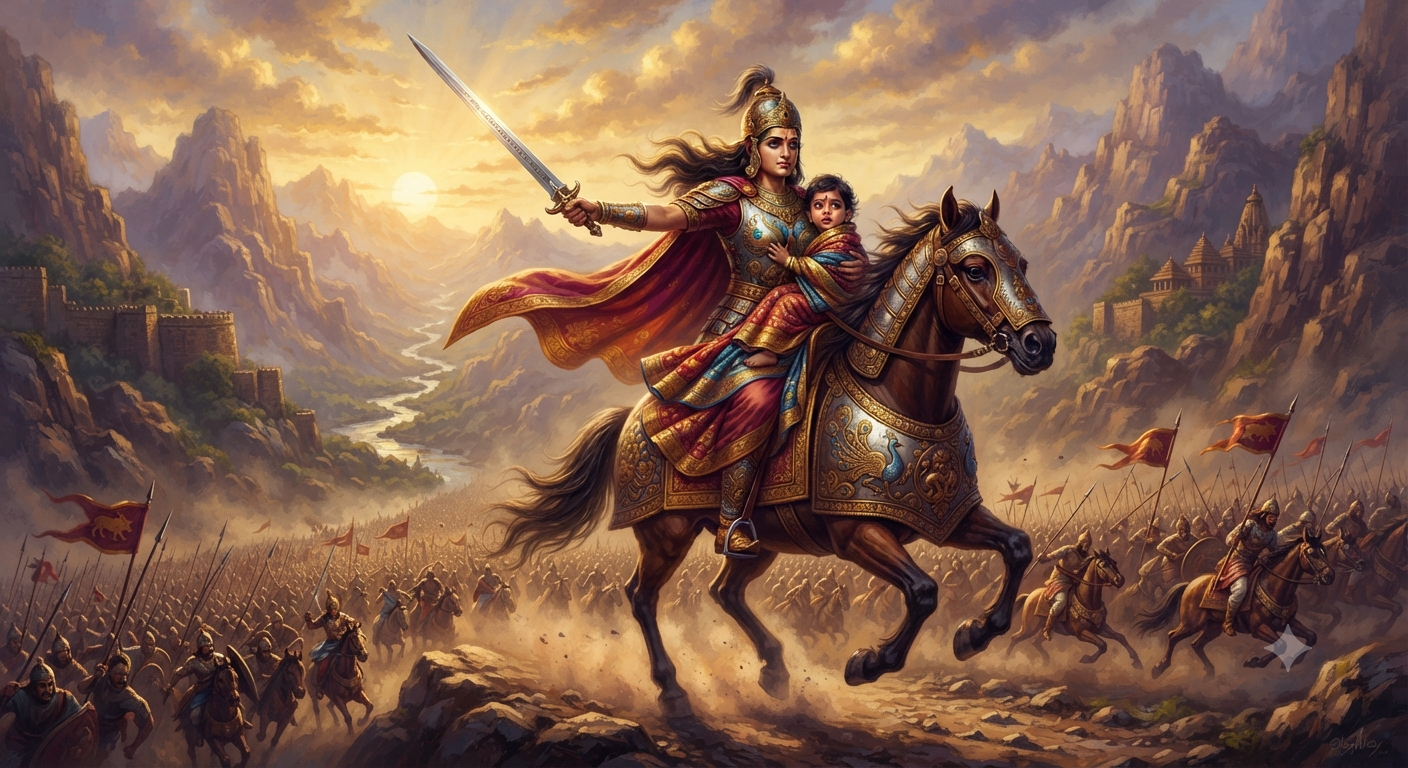

There are moments in history when the fate of an entire civilisation hangs on the shoulders of a single leader, a single river, and a single, unyielding resolve.
In the late 17th century, the expansionist Mughal Empire was an unstoppable juggernaut. From the fertile plains of Punjab to the Deccan, its armies had swept across the subcontinent, absorbing kingdoms into a massive imperial fold. But as the Mughal war machine turned its eyes toward the lush, emerald valley of Assam, it encountered a barrier it could neither break nor buy.
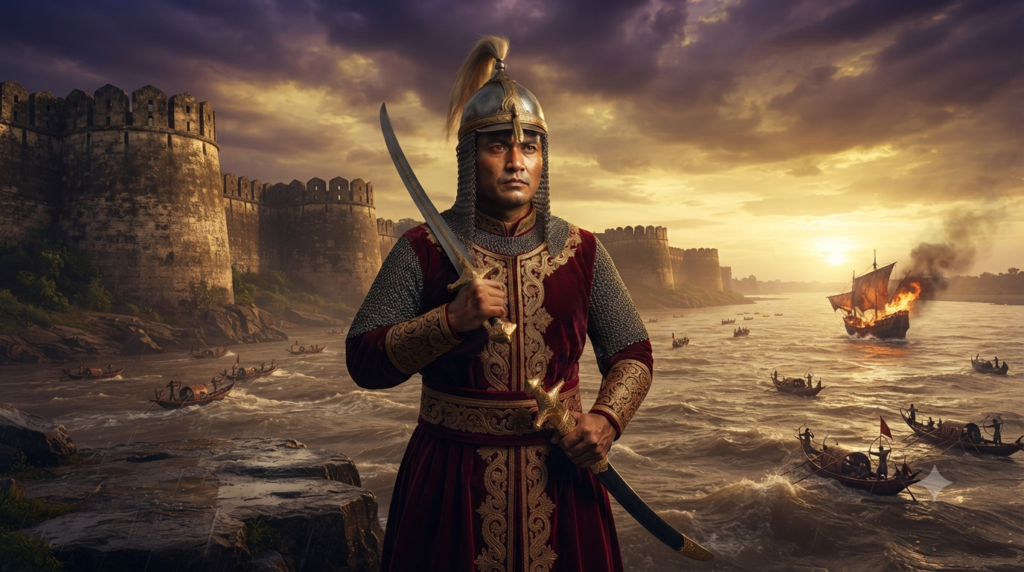
This is the story of the Battle of Saraighat (1671)—the greatest naval standoff in Indian history—and Lachit Borphukan, the Ahom commander who drew a line in the waters of the Brahmaputra and declared that the Northeast would remain free.
The Rising Shadow: The Mughal Ambition
By 1660, Emperor Aurangzeb sat upon the Peacock Throne in Delhi, determined to stretch the borders of his empire to their absolute limits. To secure the eastern frontier, he appointed his most formidable general, Raja Ram Singh of Amber, to lead a massive imperial army into Assam.
The objective was simple: crush the Ahom Dynasty, annex the Brahmaputra Valley, and open a direct gateway to the kingdoms of Southeast Asia.
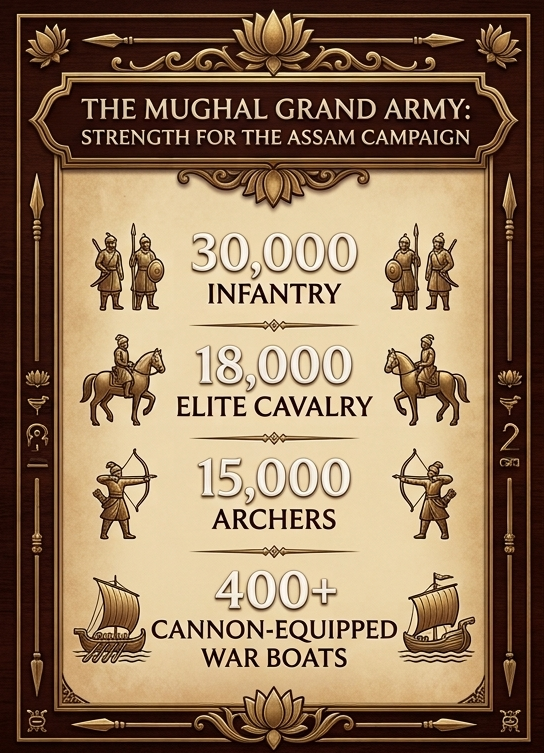
The Ahoms, who had ruled Assam since 1228, had suffered a humiliating defeat a few years earlier, losing their capital, Garhgaon, and being forced to pay a massive indemnity. The kingdom was bruised, weary, and heavily outnumbered.
But under the newly crowned Ahom King, Swargadeo Chakradhwaj Singha, surrender was not an option. The King turned to a young, disciplined military commander from a lineage of statesmen. His name was Lachit. Impressed by his fierce intellect and structural discipline, the King presented him with a gold-hafted sword (Hengdang) and the title of Borphukan—the supreme commander of the forces of Lower Assam.
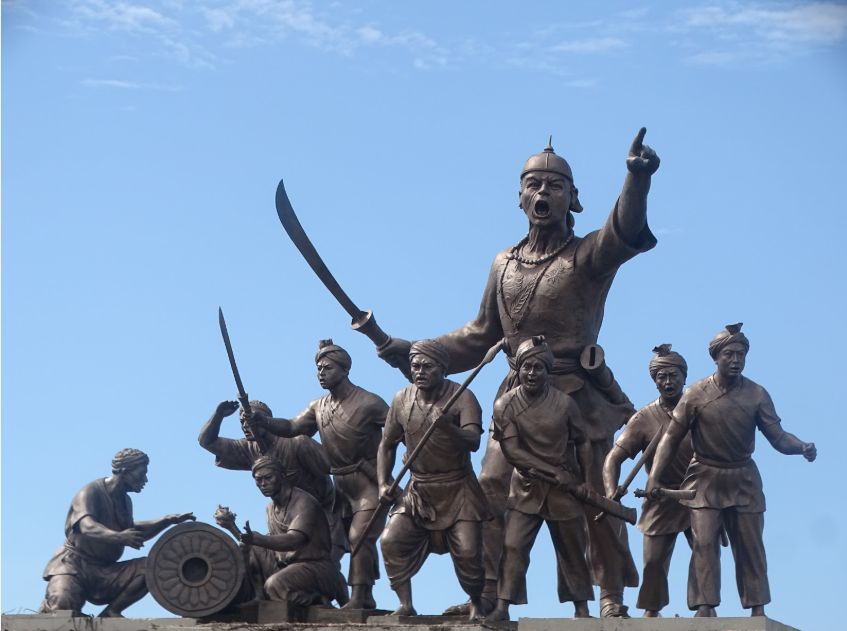
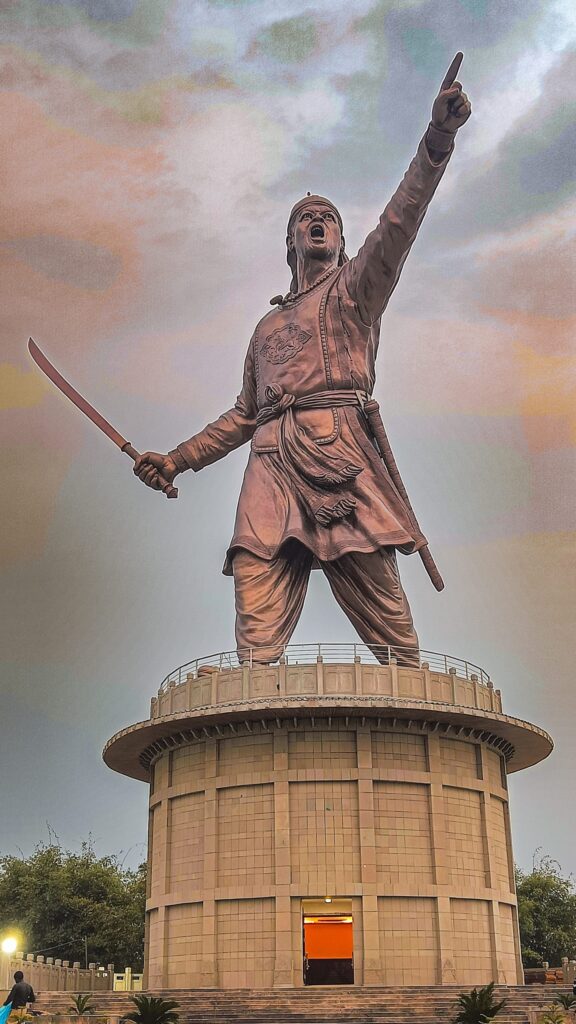
War in the Shadows: The Strategy of the Weak
Lachit Borphukan was a master of asymmetrical warfare. He looked at the numbers and realised a fundamental truth:
If we fight the Mughals on the open plains, we are dead.
The elite Mughal cavalry was unmatched in flat terrain. Therefore, Lachit decided to dictate the geography of the war.
Using the rugged hills, dense jungles, and treacherous rivers of Assam to his advantage, Lachit executed a brilliant war of attrition. According to the Buranjis, the historical chronicles of the Ahom Kingdom, Lachit built a network of mud fortresses (Garhs) around Guwahati, transforming the narrow neck of the Brahmaputra Valley into a giant choke point.
Whenever the Mughal cavalry tried to advance, Ahom guerrilla fighters (Daga-Yuddha) would strike from the dense forests under the cover of night, vanishing before the imperial army could mount a counter-offensive.
Raja Ram Singh, frustrated by these unconventional tactics, tried to bribe Lachit. He sent a letter with a bag of poppy seeds, implying that the Ahom army was as numerous as the seeds but lacked substance. Lachit sent back a bag of sand, with a chilling message:
“The poppy seeds will grind to dust. But our soldiers are like the grains of this sand—indivisible, unyielding, and impossible to swallow.”
The Ultimatum: Country Above Kin
To prepare for the final Mughal onslaught, Lachit ordered the construction of a critical defensive earthen wall—known as an Andharubali—overnight near the banks of the Brahmaputra. A masterpiece of military engineering, this multi-layered earthen rampart was designed specifically to funnel the Mughal forces away from the land and into the river’s narrowest bottleneck. He entrusted the supervision of this high-stakes project to his own maternal uncle.
Late into the night, Lachit arrived to inspect the progress. To his horror, he found the workers exhausted, sleeping, and the wall incomplete. The Mughal army was only hours away from launching an attack.
When his uncle attempted to excuse the delay, citing the men’s sheer exhaustion, Lachit’s face hardened. In a moment that has gone down in the annals of Indian patriotism, Lachit drew his Hengdang sword and struck down his own uncle. Turning to the petrified soldiers, he roared:
“My uncle is not greater than my motherland!”
Galvanised by this terrifying demonstration of duty, the soldiers worked with superhuman speed. By dawn, the massive defensive wall was complete, sealing off the land route to Guwahati and forcing the Mughals into the one place they did not want to fight: the river.
The Battle of Saraighat: Fire on the Water
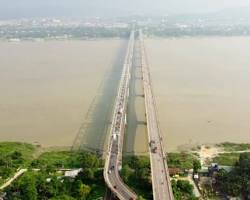
In 1671, the conflict reached its climax at Saraighat, where the mighty Brahmaputra River narrows to its absolute tightest point—just under a kilometre wide.
To make matters worse, Lachit Borphukan had fallen critically ill with a severe fever. Deprived of their commander’s physical presence on the front lines, the Ahom soldiers began to lose heart. Seeing the massive Mughal fleet of warships sailing down the river, some Ahom boats began a slow, panicked retreat.
Lachit, lying on his sickbed in his tent, heard the cries of retreat. Dragging his fever-ridden body outside, he demanded to be carried to his war boat. He looked at his retreating men and shouted across the water:
“If you want to flee, flee! Let the Mughals take me captive. But tell our King that his Borphukan died fighting for his people!”
The sight of their dying commander boarding his boat and rowing directly into the teeth of the enemy fleet sent a shockwave of adrenaline through the Ahom ranks. Retreat turned instantly into a ferocious, unified charge.
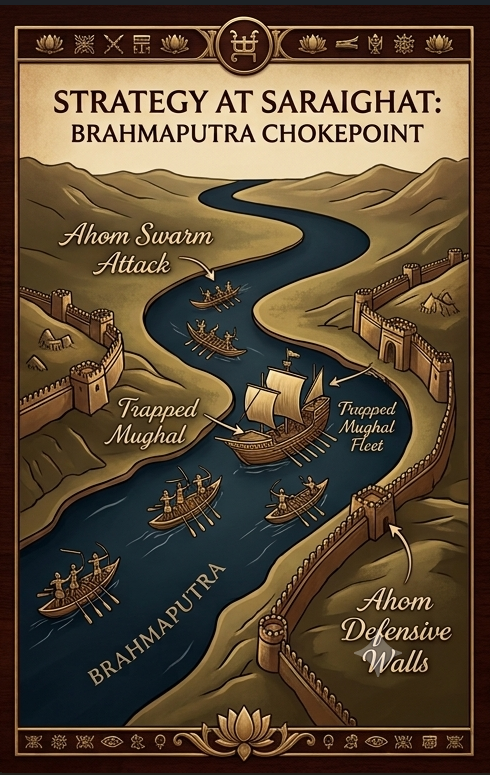
The Ahoms used their light, highly manoeuvrable wooden boats (Bacharis) to swarm the heavy, sluggish Mughal galleons. They built temporary floating bridges across the river, creating a web that trapped the imperial warships in the narrow channel.
The river turned red. The sound of clashing steel, cannon fire, and patriotic war cries echoed off the surrounding hills. The Ahoms, fighting with the desperation of men protecting their homes and families, boarded the Mughal vessels.
By the end of the day, the invincible Mughal fleet was shattered. Raja Ram Singh’s forces retreated in utter disarray, completely routed. The Mughal general, in his final dispatches to Delhi, wrote with deep respect:
“Glory to the commander! One single man leads all the forces… I have not seen such a master of weapons and strategy in all of India.”
An Eternal Legacy
Lachit Borphukan did not live long to celebrate the peace he had secured. Exhausted by the brutal toll of the war and his severe illness, he passed away shortly after the battle in 1672.
But his sacrifice ensured that Assam remained independent, preserving the distinct cultural, spiritual, and social identity of the Northeast for generations to come. Today, the National Defence Academy (NDA) honours India’s finest cadet every year with the Lachit Borphukan Gold Medal, ensuring his spirit of absolute leadership, duty, and patriotism continues to inspire the defenders of modern India.
Lachit’s story is a timeless reminder that no army is too small, no enemy is too large, and no mountain is too high when you are fighting for the soil that gave you birth.
Historical Reference
1. This narrative is reconstructed directly from the Buranjis, the invaluable, contemporaneous chronicles of the Ahom Dynasty. These texts serve as our primary window into the exact strategies, letters, and spoken words of Lachit Borphukan and his contemporaries, ensuring that the voice of Assam’s greatest hero continues to echo accurately across centuries.
2. Our account is further verified by the strategic engineering of the Garh fortifications that still bear testament to his military genius, the documented correspondence between Borphukan and the Mughal command, and the preservation of the Hengdang as a symbol of Ahom sovereignty. These primary sources ensure that the voice of Assam’s greatest hero continues to echo accurately across centuries.